
Laura Pollock
I’m an Associate Professor in quantitative ecology at McGill University.
My research addresses various topics in ecology, biogeography, and conservation, but I’m increasingly drawn to the pursuit of making sense of large-scale biodiversity patterns via statistical models.
I’ve worked in a variety of places and continents- most recently in France with Wilfried Thuiller on a Marie Curie project CLEF ‘Conserving the Legacy of Evolution into the Future’. Before that in Australia at the University of Melbourne as part of the National Environmental Research Program (NERP Environmental Decisions Hub). And before that doing a PhD with Pete Vesk studying the coolest trees (eucalypts, in case you weren’t aware of that fact), and before that in lowland swamps and marshes of the Gulf of Mexico with Loretta Battaglia, and before that in my own backyard- the mountains of Wyoming with Kate Dwire.

Postdocs

Katherine Hébert
Katherine is a postdoc working on the testing and development of biodiversity indicators. Her PhD pointed to a number of considerations for ensuring robust trends for population-based metrics (e.g. Living Planet Index) and now she is broadening this outlook to other data- and model-based metrics. She is the scientific coordinator on our project recommending indicators for the Ministère de l’Environnement, de la Lutte contre les changements climatiques, de la Faune et des Parcs (MELCCFP). Read more.

Pierre Rogy
An arthropod enthusiast, Pierre has always had a deep fascination for the complexity of life. After completing a B.Sc. in Environmental Biology at McGill University, Pierre did his M.Sc. and Ph.D. with Diane Srivastava at UBC. He studied the impacts of tank bromeliads on food webs through both applied and theoretical lenses, using a combination of computer models, observational studies and manipulative field experiments. Pierre now works in partnership with Environment and Climate Change Canada to model energy flow in ecosystems across the country.
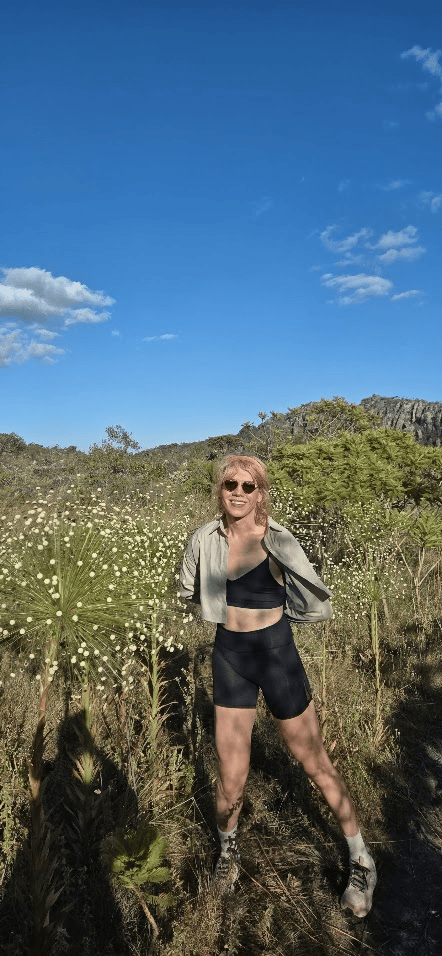
Pedro (Pepe) H. Braga
Pepe combines ecological and evolutionary theory, climate and biological data, modern statistical and computational tools to address fundamental questions about the drivers and trajectories of biodiversity change. More recently, Pepe has been integrating field-based observations, community ecology, biogeography, and AI-assisted approaches to advance biodiversity monitoring and environmental decision-support across scales.
Pepe earned a B.Sc. and M.Sc. in Ecology and Evolution from the University Federal of Goiás (Brazil), and investigated how direct and indirect development in Neotropical anurans influenced the evolution of their climatic niches. After moving to Montréal (Canada) to pursue a Ph.D. at Concordia University, Pepe researched climate–biodiversity interactions across spatial, temporal, and phylogenetic scales, using bats and tetrapods as study systems.
Now, Pepe’s postdoctoral research is supported by a Mitacs Accelerate Fellowship and bridges the work of the Quantitative Biodiversity Laboratory, led by Dr. Laura Pollock, with the R&D and Innovations team at Habitat Nature, led by Dr. Sylvia Wood.
Graduate Students

Abbie Jones
Abbie is a PhD student working on advances in species distribution models that correct for spatial and taxonomic biases and that combine presence-only with presence-absence datasets.. and she’s doing lots of them (for tens of thousands of plant species!).
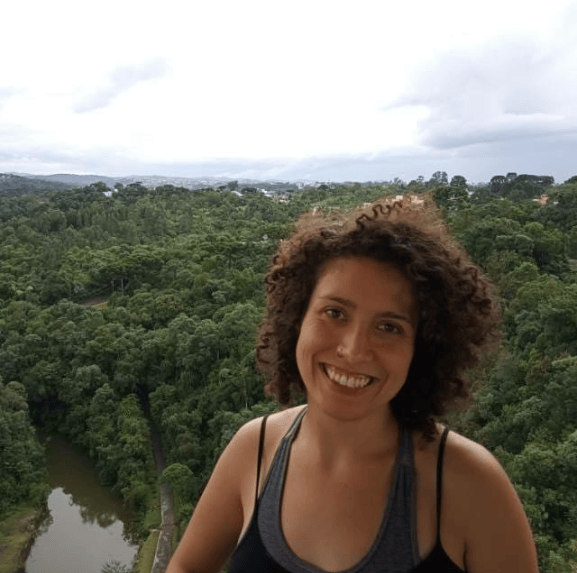
Janaína Serrano
Janaína is doing a PhD in conservation biogeography. She’s interested in how threats impact species distributions across the landscape, especially those related to climate and land-use change. She is currently comparing threat based on trait vulnerability assessments to climate change risk and population trends to identify species likely at risk but not currently listed. That and cultivating an enthusiasm for Canadian winter!
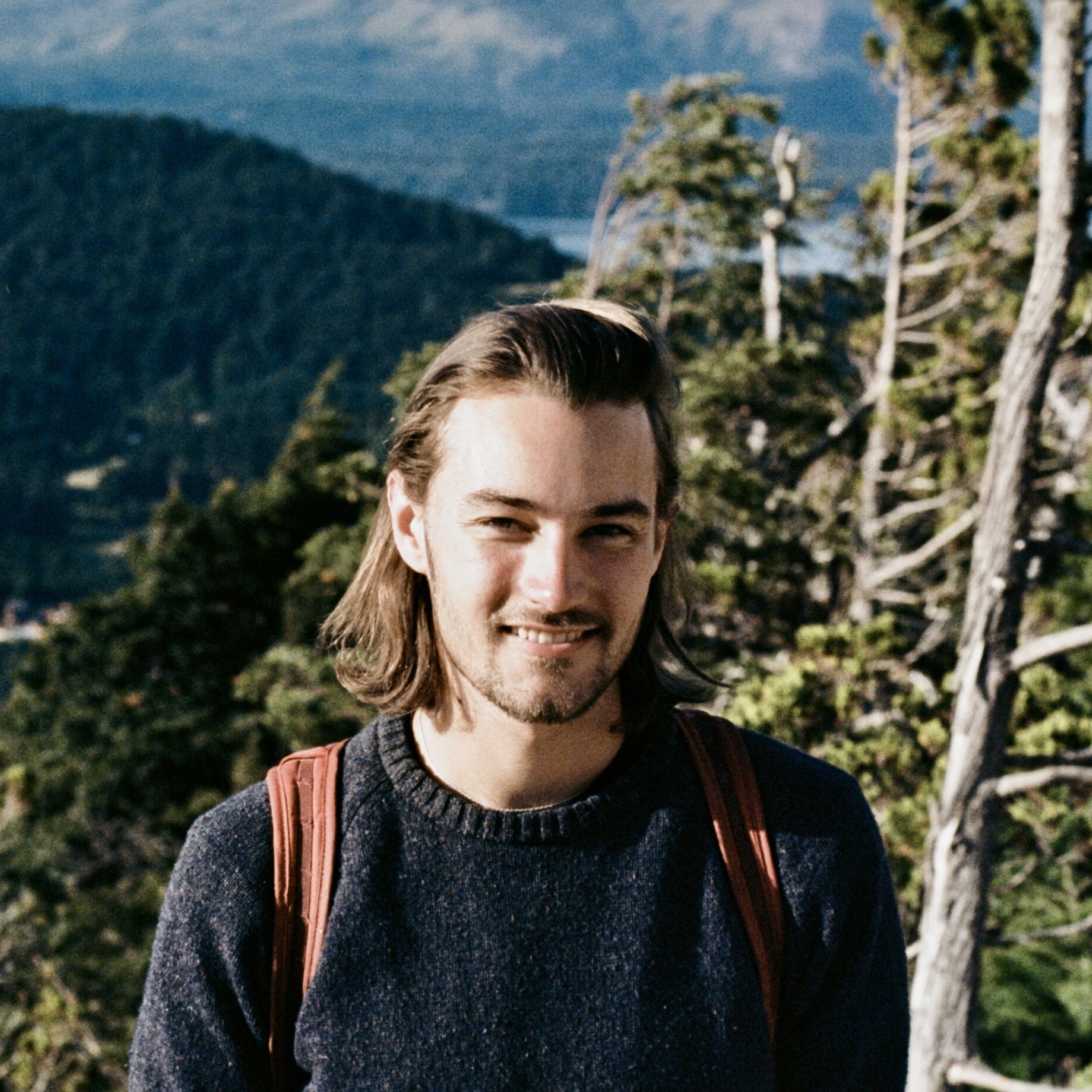
Isaac Eckert
Isaac is doing a PhD on the biogeography of Canadian species and is interested in the implications of the northern biodiversity paradox- climate projections indicate large increases in the diversity of many northern communities, but how realistic are these projections? which species might track their climate niche and why? How does a static reserve system match with the dynamic nature of expected climate change shifts? Isaac’s website

Maho Horikawa
Maho is an incoming MSc student working on the interface of community science and data analysis to optimize spatial gaps in Canada’s biodiversity. Currently she is working to Blitz the Gap in collaboration with nature enthusiasts across the country to help improve our understanding of biodiversity in Canada.

Maximiliane Jousse
Max is doing a PhD project on developing and testing biodiversity indicators that account for seasonal fluctuations and species associations. She is starting with birds and trees of the northern temperate and boreal forests.

Noah Wightman
Noah is a PhD student (co-supervised with Brian Leung) working on integrative models that use different input data sources (presence-only, survey data, reserve species lists) to account for different types of bias in distribution and occupancy models. Currently, he is using survey data and simulations to figure out how to deal with correlated probabilities and the discrepancy between the scale at which we sample versus the scale at which we would like to make predictions.

Christophe Brabant
Christophe is a PhD candidate studying biodiversity change in freshwater ecosystems. His research focuses on mapping human-driven threats and developing spatial prioritization approaches to guide conservation planning for freshwater systems.

Maria Camila Diaz Corzo
Camila is a PhD student (co-supervised with Guillaume Blanchet) whose research centers on developing statistical methods that explicitly integrate expert knowledge and citizen-science data within species distribution models, strengthening model robustness for conservation planning, with butterflies serving as a model system.
Undergraduate students/RAs

Nina Obiar
Originally a Master’s student in the lab, she has now transitioned into the role of Research Coordinator, now managing the day-to-day operations of the research team. She works closely with each member of the lab to support their research. Her role is multifaceted and can include database management and data integrity workflows, community outreach, conference coordination, and digital communication updates for the lab’s public website.

Ryan Hull
Ryan is a research assistant working on coordinating Blitz the Gap efforts across Canada. He is currently working on increasing the accessibility of community science initiatives like Blitz the Gap to incorporate prioritization sampling in commitment to open science initiatives. He is a recent graduate from McGill with a BSc in Biology and is continuing on his journey in Concordia for a Master’s in Environmental Assessment.
Former lab members
Graduate students
Postdocs
Joey Burant research page and twitter.
Wenyuan Zhang research page
Undergraduate students/RAs
Darren Li
Camille Simon
Olivia St-Laurent
Micah Pavlidis
Phoebe Leung
Leeya Nagpal
Sebastian Sangha